Indoor Bounce House Parties: A Year-Round Entertainment Solution | SATX Bounce Blog
Rain on a Saturday. A cold front in January. A 102 degree afternoon in August. San Antonio weather ruins outdoor parties in three different ways.
Indoor bounce house parties fix all three. The unit goes inside, the weather stops mattering, and the date holds.
This guide covers ceiling height, floor space, venue rules, and which units actually fit indoors. Check these before you book a hall.
What Indoor Bounce House Parties Need
Inside, the ceiling is the limit, not the yard.
- Measure ceiling height first. Most units need 12 to 16 feet.
- Watch for fans, lights, sprinkler heads, and beams.
- Leave three feet clear on every side.
- Check that the door is at least 36 inches wide.
- Find an outlet within 50 feet of the setup spot.
Get the ceiling number wrong and nothing else matters.
Which Units Fit Inside
Not every unit works indoors. These do.
- Small castles at 13 by 13 with a 12 foot peak.
- Toddler units with low walls.
- Obstacle runs, which are long but low.
- Interactive games that sit under 10 feet.
Skip combo units with slides. Skip anything wet. Those need height and drainage a hall will not give you.
Finding a Venue
Most of our indoor bounce house parties run in one of four kinds of space.
- Church halls, which usually have the height and the floor.
- School gyms, which are ideal but book far ahead.
- Community centers, which are cheap and often free on weekdays.
- Large garages, which work for small units and small groups.
Ask the Venue First
Call before you book the unit. Four questions settle it.
- What is the ceiling height at the lowest point?
- Do you allow inflatable units on the floor?
- Do you need a certificate of insurance from the rental company?
- Where is the nearest outlet to the setup area?
We send insurance paperwork to any venue that asks. Give us a week.
Floor Type Matters
Indoors we cannot drive stakes. We use weight bags instead.
- Gym floors and tile work well with bags.
- Carpet works but slides more, so we add weight.
- Never set up on a wet floor.
- We put a tarp down to protect the finish.
Why Inside Beats Outside
Weather is the obvious reason. It is not the only one.
- The date holds no matter the forecast.
- Climate control keeps kids from overheating.
- No sun means no sunscreen and no burns.
- Noise stays in one room instead of the whole street.
- Cleanup is faster on a hard floor.
Good indoor bounce house parties also run longer. Kids do not tire out the way they do in August sun.
Best Months to Go Inside
- July and August, when highs pass 100.
- December through February, when a front can drop 30 degrees overnight.
- Any week with rain in the forecast.
Spring and fall are still better outside. Save the hall for the hard months.
Planning the Day
A hall party runs a little differently than a yard party.
- Book the venue first, then the unit.
- Add an hour on each end for setup and takedown.
- Set a rule of no food or drinks inside the unit.
- Put one adult at the entrance the whole time.
- Keep shoes in a bin by the door.
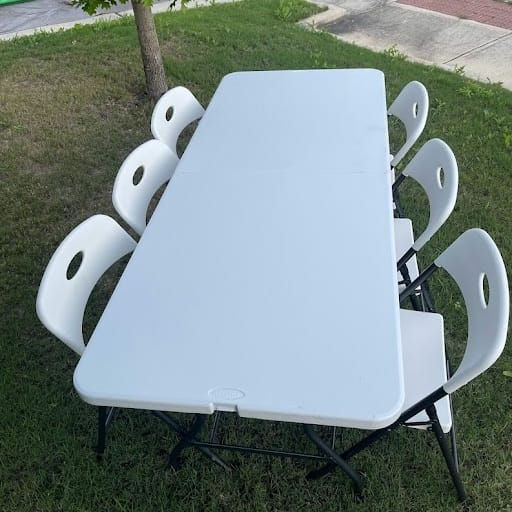
See our units built for indoor bounce house parties and pair one with a party package for tables and chairs. For school and church bookings, our school event team handles the paperwork.
Book Indoor Bounce House Parties Year Round
Measure the ceiling before anything else. Confirm the venue allows units and ask what paperwork they need. Pick a unit that fits under the lowest beam.
We bring weight bags, a floor tarp, and the insurance certificate. Setup takes about 30 minutes inside.
Indoor bounce house parties turn a rained out Saturday into a party that still happens. Tell us your venue and date and we will check the fit for you.